
Start with your own boiling point
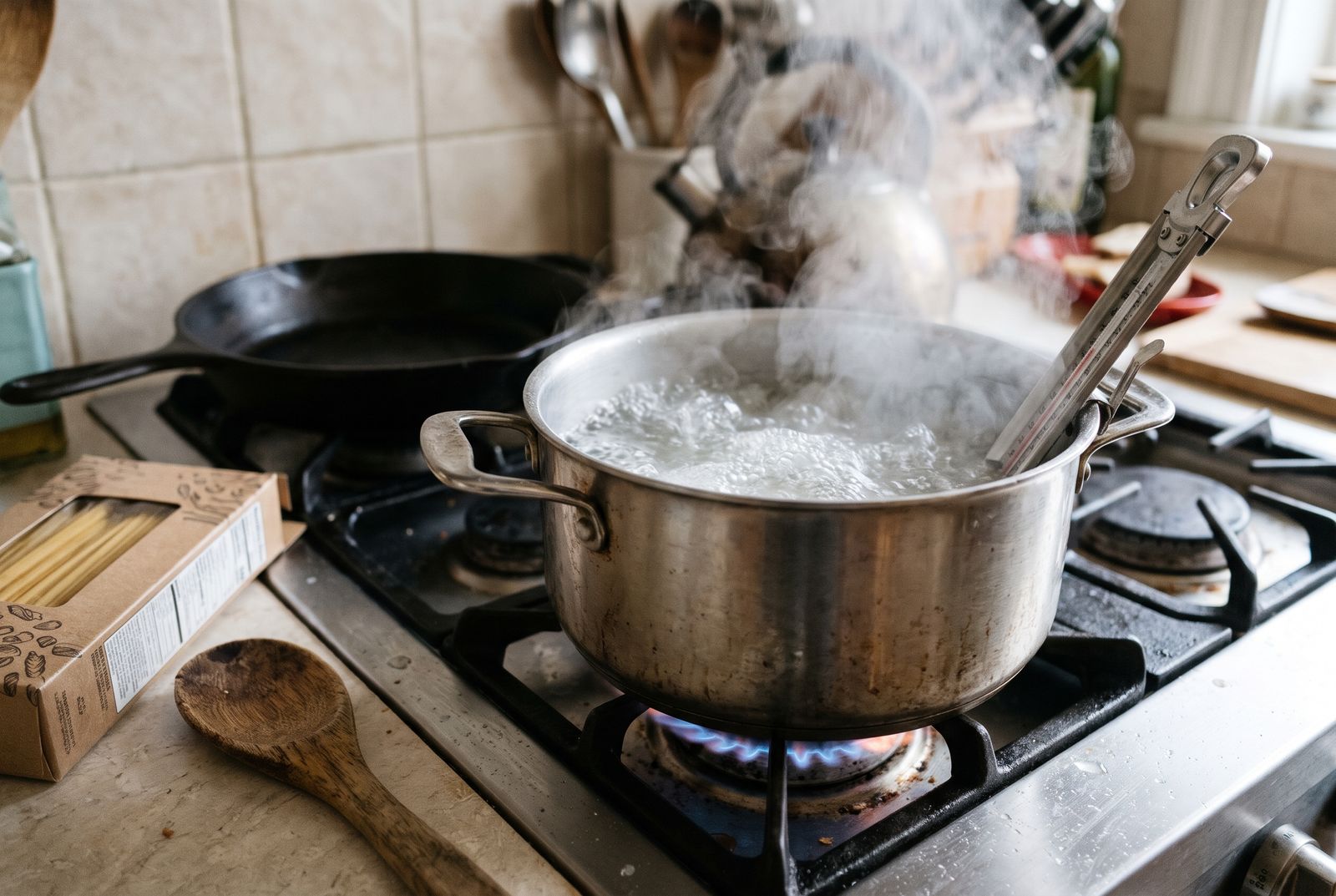
At sea level, water boils at 212°F. Climb, and the air pressing on the water drops, so molecules escape into steam at a lower temperature. At your saved elevation of feet, a rolling boil sits near °F, about °C.
That gap of ten degrees or more is the whole story of altitude cooking on the stove. A boiling pot looks the same as it does in Florida, bubbles and all, but it is delivering less heat into the food. Turning the burner up does not help: extra energy just makes more steam, not hotter water.
| Elevation | Boiling point | For reference |
|---|---|---|
| 0 ft | 212°F / 100°C | Sea level |
| 3,000 ft | 206°F / 97°C | |
| 4,600 ft | 203°F / 95°C | Grand Junction area |
| 5,280 ft | 202°F / 95°C | Denver |
| 6,000 ft | 201°F / 94°C | Colorado Springs area |
| 7,500 ft | 198°F / 92°C | Estes Park area |
| 8,500 ft | 196°F / 91°C | |
| 9,600 ft | 194°F / 90°C | Breckenridge area |
| 10,150 ft | 193°F / 89°C | Leadville area |
Calculated from the standard atmosphere. A passing storm can shift the real value by about a degree. Town elevations are rounded.
Test your thermometer
Clip a candy or probe thermometer into a pot of rapidly boiling water and read it after a minute. Whatever it says is your boiling point today, and it also tells you how far off the thermometer is. That single number is the most useful thing you can know before making candy or jam.
Pasta, rice and eggs
Pasta
Dried pasta takes a few minutes longer than the package says, and more at higher elevations. Start tasting at the package time and keep going. Use plenty of water and a lid to bring it back to a boil quickly after the pasta goes in, because the water already evaporates faster up here.
Rice and other stovetop grains
Rice cooked by the absorption method often finishes crunchy in the center at altitude because the water runs out before the grain is soft. Add a few extra tablespoons of water per cup of rice and give it more time over low heat with the lid on. If you cook rice often, a rice cooker or the pressure cooker method below takes the guesswork away.
Eggs
Hard-cooked eggs need a few extra minutes. Poached eggs set more slowly in cooler water, so keep the water at a gentle simmer rather than a hard boil, which only tears the whites apart. For soft-boiled eggs, find your own timing once and write it on the fridge.
Beans, lentils and whole grains
Dried beans are where altitude cooking can get frustrating. Beans need sustained heat to soften, and at 202°F they can take far longer than a sea-level recipe promises, sometimes hours longer. Old beans make it worse, and so does a dry pantry, since stored beans keep losing moisture.
- Soak beans overnight, or use a quick soak, before cooking. It shortens the stovetop time noticeably.
- Buy beans from a store with steady turnover; beans that have sat for a year may never soften fully.
- Add acidic ingredients such as tomatoes, vinegar or wine after the beans are tender. Acid firms the skins.
- Keep the lid on and top up with hot water as needed. Evaporation is faster than you expect.
Lentils and split peas are more forgiving because they are small and thin. Whole grains like farro, wheat berries and brown rice behave more like beans and benefit from extra time and liquid.
Pressure cookers and slow cookers
A pressure cooker is the closest thing to a cheat code at altitude. Sealing the pot raises the pressure inside, which raises the boiling point well above what an open pot can reach. Beans, stocks, braises and grains that crawl along on the stovetop become weeknight food. Some manufacturers suggest increasing cooking time by about 5 percent for every 1,000 feet above 2,000 feet; your manual is the best source for your model.
Slow cookers go the other way. They work by holding food just below a simmer for hours, and at altitude that point is lower. Recipes may need more time, and tough cuts may need the high setting for part of the cook. Check that meat reaches a safe internal temperature with a thermometer rather than trusting the clock.
Candy and sugar temperatures for your elevation
Candy recipes depend on cooking a sugar syrup until enough water has evaporated. The thermometer target in a sea-level recipe assumes water boils at 212°F. Up here the syrup reaches each stage at a lower temperature, so following the printed number overcooks it: fudge turns grainy, caramels set hard, brittle scorches. The usual rule is to subtract the difference between 212°F and your boiling point.
Candy stage temperatures
The same logic applies to jam and jelly. A sea-level jelling point of about 220°F becomes roughly 8°F above your local boiling point. The cold plate test, where a spoonful of jam wrinkles when pushed on a chilled saucer, is a good cross-check at any elevation.
Frying, roasting and the oven
Dry heat in an oven is less affected than boiling, so roasts, sheet-pan dinners and casseroles mostly follow their recipes. Expect food to dry out a little faster; covering a braise or adding a splash more liquid helps.
Deep frying is a special case. The water inside food boils off at a lower temperature, so the outside can brown before the inside cooks. Some extension guides suggest lowering the oil temperature by about 3°F for every 1,000 feet of elevation and frying a little longer. Thick pieces like bone-in chicken benefit most.
Food safety notes
Same targets, more time
Safe internal temperatures for meat, poultry and leftovers do not change with altitude. What changes is how long moist-heat methods take to get there. An instant-read thermometer settles the question every time. For home canning, follow a tested recipe with its altitude table, such as those from the USDA or your local extension office. Do not improvise processing times.
Coffee and tea brewers notice altitude too. Water just off the boil is already below 205°F up here, which is cooler than many brewing guides assume. Pour-over coffee may taste better with a slightly finer grind or a longer brew, and green or white teas are less likely to scorch.
If you bake as well as cook, the chemistry is different again. The high-altitude baking guide has its own adjuster for leavening, sugar and liquid. And if you are cooking for visitors fresh off a plane from the coast, see hosting guests who are new to altitude for menu ideas that go easy on a body that is still adjusting.
Questions about cooking at altitude
What temperature does water boil at in Denver?
Roughly 202°F, give or take a degree depending on the weather. At sea level it is 212°F. Higher towns are lower still: around 10,000 feet the boiling point is close to 194°F.
Do safe internal temperatures for meat change at altitude?
No. The safe internal temperature for chicken, ground beef or pork is the same anywhere. What changes is how long it takes to get there with moist heat, so rely on an instant-read thermometer rather than recipe timing.
Is a pressure cooker worth it at altitude?
For beans, whole grains, stocks and tough cuts, it makes a large difference. Sealing the pot raises the pressure inside, which pushes the boiling point back up. Check your manual for its altitude guidance, since some models suggest longer times as elevation increases.
Do I need special instructions for home canning in Colorado?
Yes. Tested canning recipes include altitude adjustments, usually longer processing times for water-bath canning or higher pressure for pressure canning. Use a tested source such as the USDA or your extension office and follow its altitude table exactly.