
What guests from sea level may feel
Most visitors to the Front Range feel fine, but many notice something in the first day or two. Common experiences include a dull headache, getting winded climbing stairs, feeling unusually tired, a dry mouth and nose, a smaller appetite and restless sleep on the first night. Higher destinations make these more likely. A guest who feels fine in Denver may feel quite different after driving up to a mountain town the next morning.
These symptoms usually ease as the body adjusts over a few days. Your job as a host is not to diagnose anything. It is to make the adjustment easy: a calm schedule, plenty of water within reach, a comfortable room and a sense that slowing down is completely normal.
Not medical advice
This guide shares general hosting ideas. Guests with heart or lung conditions, who are pregnant, or who have other health concerns should ask their own doctor about high-elevation travel before the trip.
Before they arrive
A short message a week ahead sets expectations and saves a lot of first-day discomfort. Mention the elevation of your home and any places you plan to visit, and suggest they pack:
- A refillable water bottle they will actually carry.
- Lip balm with SPF, sunscreen and sunglasses, even in winter.
- Layers. Mornings can be cold and afternoons warm, especially in spring and fall.
- Any regular medications, plus a copy of prescriptions.
- Moisturizer and, for contact lens wearers, rewetting drops, since dry air is hard on eyes.
Ask about plans that involve exertion or big elevation gains, like a summit hike or a ski day, and suggest putting them later in the visit.
Setting up the guest room
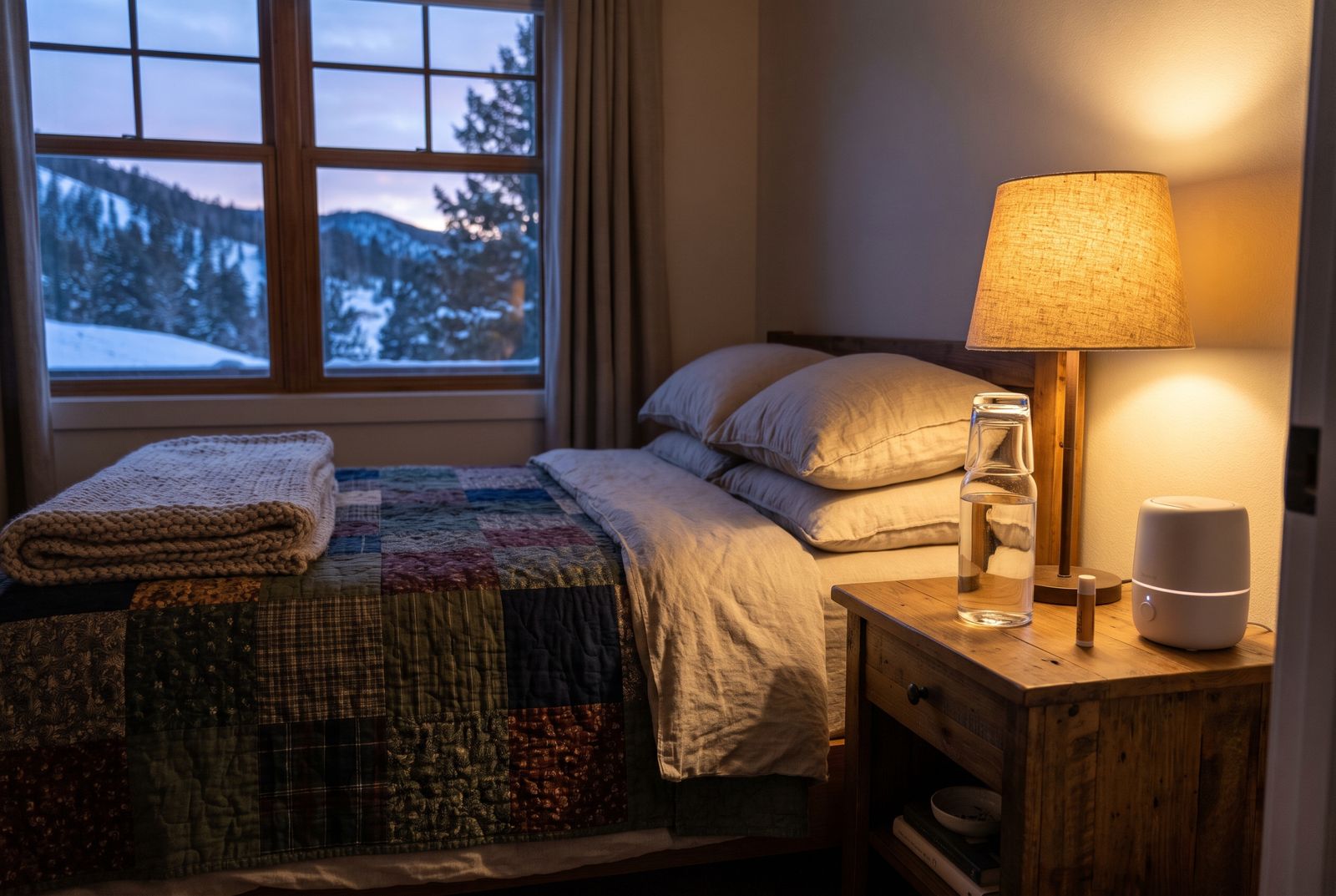
The guest room does more for a visitor's comfort than any itinerary. Dry air, a new bed and a slightly racing heart are a recipe for a poor first night. A few things make it easier. Tick them off as you prepare; the list is saved in this browser.
0 done
For the humidifier itself, the indoor humidity guide explains which type to choose and how high to set it so the windows stay clear. A plant or two on the dresser makes the room feel lived in; the houseplants guide lists easy ones.
The first 48 hours
Arrival day
Keep it light. A walk around the neighborhood, an early dinner and a relaxed evening are plenty. Travel days are dehydrating on their own, so put water in their hand when they walk in. Resist the urge to show them everything at once.
Day two
Most people feel better on the second day. It is a good day for an easy outing at your own elevation: a museum, a flat trail, a meal out. Watch for guests who seem unusually tired or quiet, and give them room to rest without feeling like they are spoiling the fun.
Heading higher
Going up into the mountains is often the highlight of a visit. If you can, wait until day two or three, keep the first mountain day modest, and remember that the effects of altitude get stronger as you climb. Pack water, snacks and layers in the car, and be ready to turn around if someone feels unwell.
The kindest itinerary for a sea-level guest saves the biggest climb for the end of the trip.
Food and drink for visiting guests
Lighter meals tend to sit better than heavy ones in the first day or two, and a smaller appetite at first is common. Have easy options on hand: soup, fruit, toast, yogurt and plenty of water, plus herbal tea in the evening.
Go easy on alcohol at the start of the visit. A celebratory drink on arrival night is understandable, but combined with travel dehydration and a short first night's sleep, it can make the next morning rough. Caffeine in normal amounts is fine for most people; just pair it with water.
If you are cooking or baking for a crowd, altitude affects your recipes too. The cooking at altitude guide has boiling points and timing changes, and the baking guide will help that welcome cake rise and stay up.
Sun and dry air
Visitors often underestimate the Colorado sun because the air feels cool. Ultraviolet exposure increases with elevation, and snow reflects sunlight back up. A sunburn can happen on a cold, clear winter day. Remind guests to wear sunscreen and sunglasses outdoors and to reapply on long days.
Dry air surprises people too: cracked lips, dry eyes, nosebleeds and static shocks. Saline nasal spray, lip balm and a humidifier at night help, as does keeping water handy all day.
When to get help
Warning signs
Get medical care promptly if a guest has a severe or worsening headache that does not ease with rest and water, confusion or unusual behavior, trouble walking in a straight line, shortness of breath while resting, a persistent cough, or chest pain. These can signal serious altitude illness or another emergency. Moving to a lower elevation is part of treatment for altitude illness, but do not delay calling 911 in an emergency.
Most visits never come close to this. Still, knowing the signs means you can act early, and that is what a good host does.
Questions about hosting altitude guests
What does altitude feel like for visitors from sea level?
Many people notice a mild headache, getting winded on stairs, tiredness, a dry mouth and restless sleep the first night or two. Symptoms are usually stronger in the mountains than in Denver and tend to ease as the body adjusts.
When should a guest see a doctor for altitude symptoms?
Seek medical care promptly for a severe or worsening headache, confusion, trouble walking straight, breathlessness while resting, or a persistent cough. These can signal serious altitude illness, and going to a lower elevation is part of the treatment. When in doubt, call a doctor or 911.
Should guests stay in Denver before going to the mountains?
Spending a night or two at a moderate elevation before going higher is common advice and gives the body time to start adjusting. Plan the big mountain day for later in the visit rather than the first morning.
Does alcohol affect visitors more at altitude?
Many visitors say a drink feels stronger here. Whatever the reason, alcohol on top of dehydration and poor first-night sleep is a rough combination, so going easy for the first day or two is sensible.
Do guests really need sunscreen in a Colorado winter?
Yes. Ultraviolet exposure increases with elevation, and fresh snow reflects sunlight back up at the face. Sunscreen, lip balm with SPF and sunglasses are worth packing even in December.
What should guests with health conditions do before visiting?
Anyone with heart or lung disease, who is pregnant, or who has other significant health conditions should talk with their own doctor before traveling to high elevation. This guide is general information, not medical advice.
No question matches that word. Try another, or send it to us.