
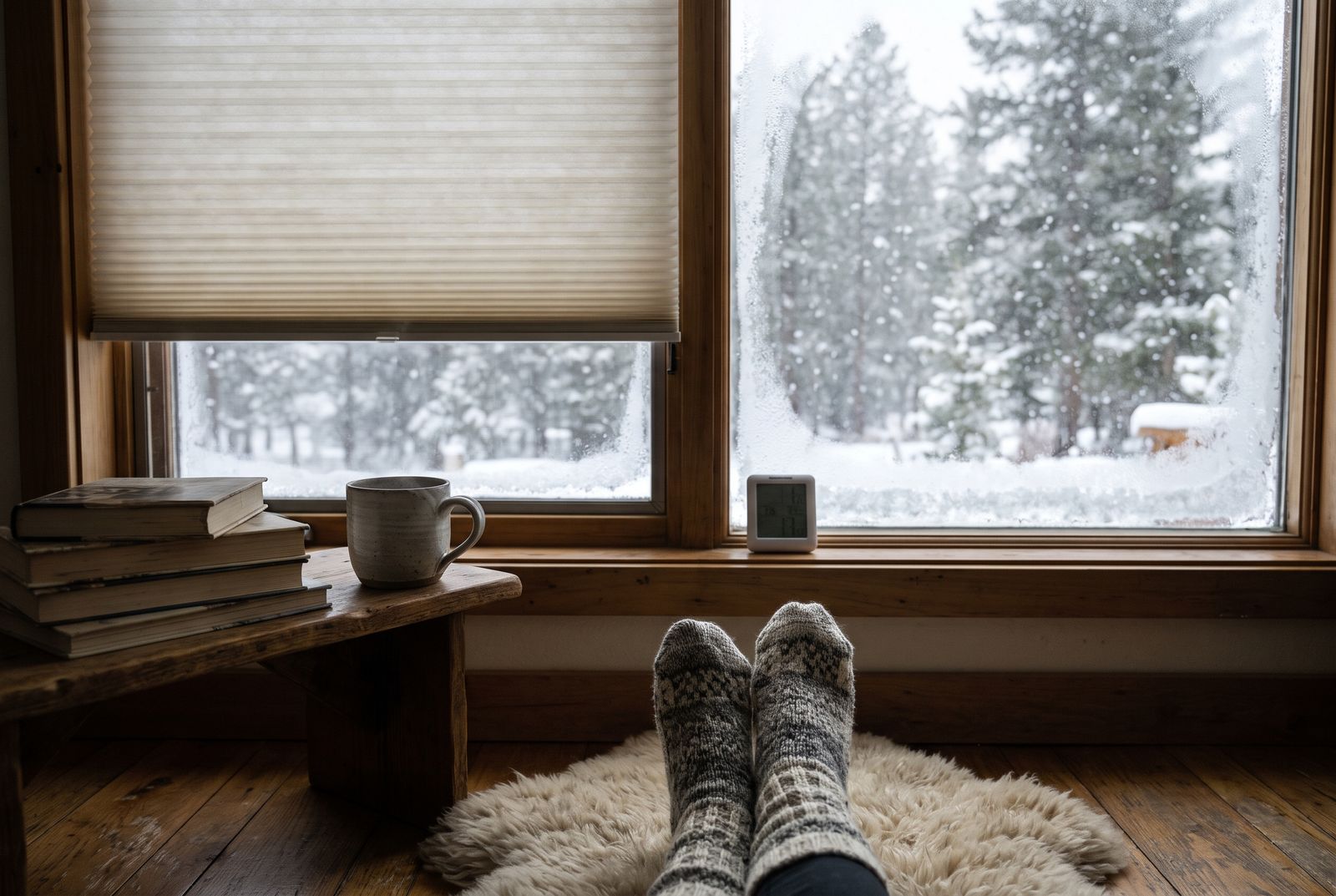
Signs the air in your house is too dry
Relative humidity is the amount of water vapor in the air compared with the most it could hold at that temperature. Cold winter air holds very little. When the furnace warms that air to 68°F, it can hold much more, so the relative humidity drops sharply even though no water left the room. That is why the driest weeks inside a Colorado house are usually the coldest ones outside.
You feel it before you measure it. Common signs include:
- Static shocks from door handles, blankets and the dog.
- Dry or cracked skin, chapped lips and itchy eyes, often worse in the morning.
- A dry throat or nose on waking, and in some people, nosebleeds.
- Gaps opening between hardwood floorboards, and doors or drawers that suddenly fit loosely.
- Guitars and pianos drifting out of tune, or a new crack in a wooden instrument or cutting board.
- Brown, crispy tips on houseplant leaves.
Wood is the slow-motion version of the same problem. It shrinks as it gives up moisture over the winter and swells again in the more humid summer months, which is why floor gaps often close on their own by June.
Measure before you fix anything
An inexpensive digital hygrometer is the most useful tool in this whole guide. Put one in the bedroom and one in the main living area, away from the humidifier itself and away from the kitchen and bathroom, where cooking and showers create brief spikes. Read them at the same time each day for a week. You will learn how dry the house really gets, which rooms differ, and whether your fixes are working.
Cheap hygrometers can be off by a few percent. If you own two, set them side by side for an hour; if they disagree, split the difference and watch the trend rather than the exact number.
Your humidity target, based on tonight's low
The U.S. EPA suggests keeping indoor humidity below 60 percent, and ideally between 30 and 50 percent. In winter the limit is usually your windows. Glass is the coldest surface in most rooms, and when humid indoor air touches it, water condenses. Repeated condensation stains sills, peels paint and can feed mold. The colder it is outside, the lower the humidity your windows can tolerate.
Window-safe humidity target
Slide to tonight's expected outdoor low.
Suggested indoor humidity
up to 35%
| Outdoor temperature | Suggested maximum indoor humidity |
|---|---|
| 40°F and above | about 45% |
| 30 to 39°F | about 40% |
| 20 to 29°F | about 35% |
| 10 to 19°F | about 30% |
| 0 to 9°F | about 25% |
| −10 to −1°F | about 20% |
| Below −10°F | about 15% |
Charts like this appear on many humidistats. Newer double- or triple-pane windows can usually handle a bit more; older single-pane or aluminum-framed windows often need less.
Choosing a humidifier: the main types compared
Portable humidifiers fall into three families, and whole-house units add a fourth option. The right choice depends on your water, who is in the house and how much daily upkeep you will actually do.
| Type | How it works | Good to know |
|---|---|---|
| Evaporative | A fan blows air through a wet wick or filter. | Tends to self-limit as the room gets humid. No white dust. Wicks need regular replacement and the fan makes some noise. |
| Ultrasonic | A vibrating plate turns water into a fine cool mist. | Very quiet. With tap water it can leave white mineral dust, so many owners use distilled water. |
| Warm mist or steam | Boils water and releases the vapor. | Boiling limits microbial growth and leaves no dust, but it uses more electricity and the hot water is a burn risk around small children and pets. |
| Whole-house | Mounted on the furnace and fed by a water line. | Humidifies every room with no refilling. Needs installation by a heating contractor and seasonal maintenance. |
Whatever you buy, size it to the room. A small tabletop unit running flat out in a large open living room will not move the needle, while an oversized one in a small bedroom can push the windows into condensation overnight. A model with a built-in humidistat, which switches off at a set level, makes it much harder to overdo things.
Keeping a humidifier clean
Standing water grows things
A humidifier tank that sits for days becomes a home for bacteria and mold, and some types can blow that into the room. Empty the tank, let it dry, and refill with fresh water daily if you can. Clean it on the schedule in the manual, and do not leave a unit full when you store it for summer.
Distilled water reduces scale and dust in every type of unit. If that is impractical, at least descale regularly with the method the manufacturer recommends. Replace wicks and filters when they stiffen, discolor or start to smell.
Other ways to add moisture
Small habits add up, especially in an apartment where you only need a few points of humidity:
- Hang laundry to dry indoors on a rack instead of using the dryer.
- Leave the bathroom door open after a shower once the fan has cleared the mirror.
- Let a hot bath cool before draining it.
- Simmer a pot of water while you are in the kitchen, never unattended.
- Group houseplants together; they add a little moisture and benefit from it themselves.
None of these will humidify a whole house the way a dedicated unit does, but on mild days they may be all you need. The houseplants guide explains which plants handle dry air on their own and which need help, and the winter comfort guide covers how humidity makes a room feel warmer at the same thermostat setting.
Two other indoor air topics worth knowing
Colorado specifics
Wildfire smoke can drift into Colorado from fires near and far. On smoky days, keep windows closed, run a portable air cleaner with a HEPA filter in the room where you spend the most time, and consider a higher-rated furnace filter if your system can handle it. Radon is also common in Colorado soils, and the state health department encourages residents to test. Test kits are inexpensive, and testing is the only way to know your own level.
Questions about dry air and humidity
What is a good indoor humidity level in a Colorado winter?
The U.S. EPA suggests keeping indoor humidity below 60 percent and ideally between 30 and 50 percent. In a Colorado winter, cold windows often set a lower ceiling, so let condensation on the glass be your signal to turn it down.
Why does my ultrasonic humidifier leave white dust?
Ultrasonic units turn water into a fine mist, and any minerals dissolved in the water travel with it and settle as dust. Using distilled or demineralized water, or a demineralization cartridge made for your model, stops most of it.
Will a humidifier stop static shocks?
Usually it helps a lot. Static builds up most in very dry air. Raising indoor humidity into the 30s or 40s tends to cut shocks noticeably, though carpet, wool and certain shoes still make some static at any humidity.
Is a whole-house humidifier better than portable units?
It is more convenient because it humidifies every room through the ductwork and needs no daily refilling, but it requires installation by a heating contractor and regular maintenance. Portable units cost less up front and let you humidify only the bedrooms.