
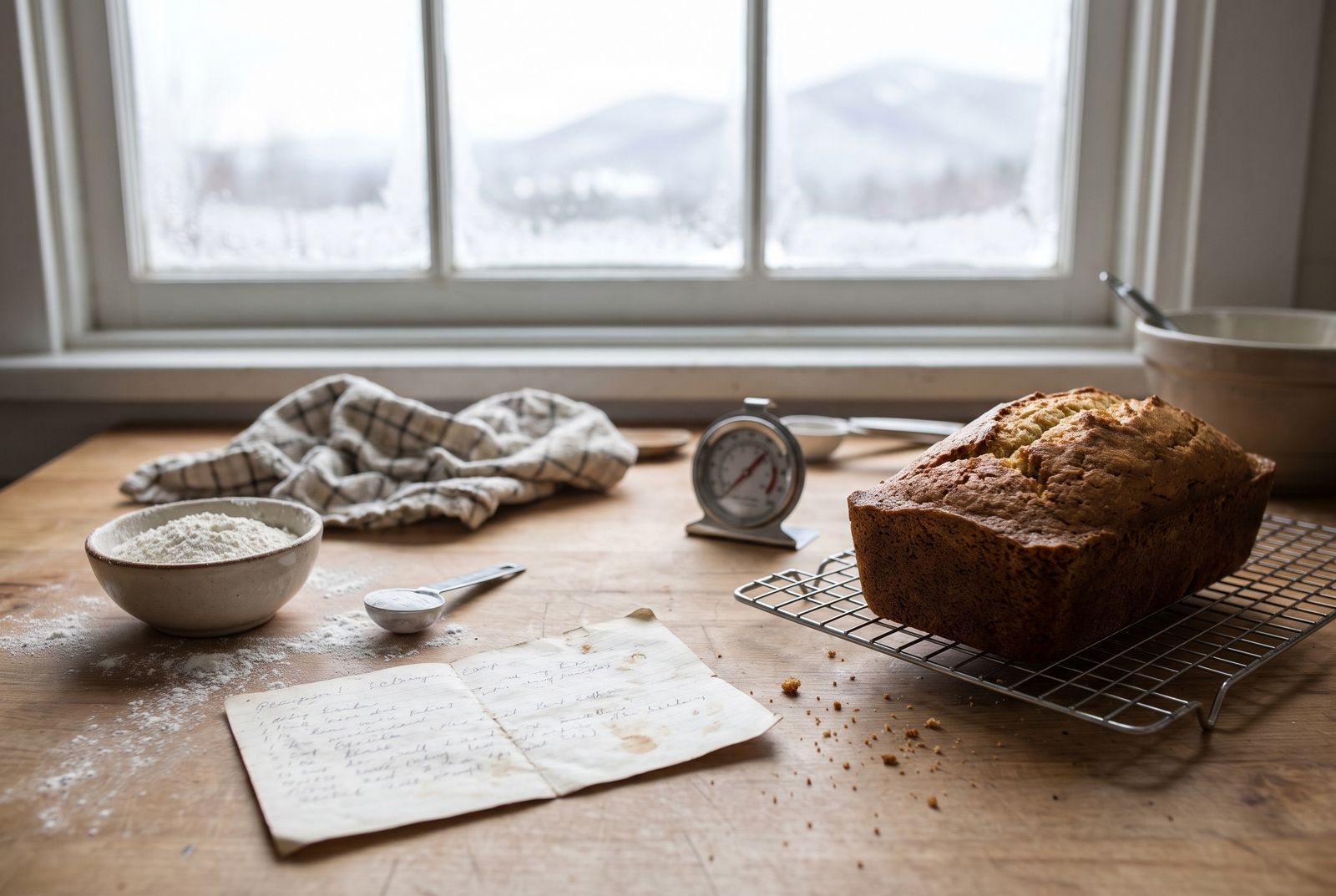
Why sea-level recipes misbehave up here
A recipe is a balance between gas, structure and moisture. Baking powder and whipped eggs make gas, flour proteins and egg set into structure, and water and fat keep everything tender. At sea level those three forces are tuned to each other. Lift the whole kitchen a mile and the balance tips in three ways at once.
First, gas expands more easily because there is less air pressure pushing back. Bubbles grow bigger and faster, so a cake rises dramatically, then the thin bubble walls tear and the middle sinks. Second, water evaporates more quickly, which concentrates the sugar in a batter. Concentrated sugar weakens the structure and makes cookies spread. Third, water boils at a lower temperature, so the batter dries out before the crumb is fully set.
The fixes follow directly from those causes. Use less leavening so the bubbles do not outgrow the batter. Use a little less sugar so the structure can hold. Add liquid to replace what evaporates. And bake a bit hotter so the outside sets before the gas runs away with it.
One change at a time
Treat the numbers below as a first try, not a final answer. Change the leavening first, bake, and write down what happened. Pencil notes on a recipe card are how most altitude bakers end up with recipes they trust.
Adjust your own recipe
Enter the amounts from the recipe you are planning to bake. Leave a field at zero if the recipe does not use it. The suggestions follow the commonly published high-altitude ranges and update when you change your elevation.
Recipe adjuster
The standard high-altitude chart
Extension services and baking companies have published versions of this chart for decades, and they agree closely. Colorado State University Extension publishes high-altitude food guidance that is worth bookmarking if you bake often. The ranges are per teaspoon of baking powder and per cup of sugar or liquid in the original recipe.
| Change | 3,000 ft | 5,000 ft | 7,000 ft and up |
|---|---|---|---|
| Baking powder, per tsp | Cut 1/8 tsp | Cut 1/8 to 1/4 tsp | Cut 1/4 tsp |
| Sugar, per cup | Cut 0 to 1 Tbsp | Cut 0 to 2 Tbsp | Cut 1 to 3 Tbsp |
| Liquid, per cup | Add 1 to 2 Tbsp | Add 2 to 4 Tbsp | Add 3 to 4 Tbsp |
| Oven temperature | Raise 15 to 25°F from about 3,500 ft, and start checking for doneness a few minutes early | ||
Many bakers also add about 1 tablespoon of flour per cup at 3,500 ft and another tablespoon for each additional 1,500 ft, which helps cookies and cakes hold their shape.
What to change first, by type of bake
Not every recipe is equally sensitive. Light, sugary, chemically leavened batters suffer most. Dense or yeast-raised doughs suffer least. Use this as a decision guide before reaching for the full chart.
Butter cakes and sponge cakes
These are the most fragile. Apply the full chart: less baking powder, a little less sugar, a little more liquid, and a hotter oven. For sponge and angel food cakes, beat egg whites only to soft peaks rather than stiff ones, because whites whipped to the limit at sea level have nowhere left to expand. Fill pans about half full instead of two thirds, and grease and flour them well.
Muffins and quick breads
Banana bread and muffins often come out with a peaked, cracked top and a gummy band underneath. Start by trimming the baking powder or soda slightly and adding a tablespoon or two of liquid. Because the batter is thick, sugar cuts matter less here than in cakes.
Cookies
Altitude cookies tend to spread thin. Add a couple of tablespoons of flour per batch, cut the sugar a little, and chill the dough before baking. A slightly hotter oven sets the edges before they run. Many drop-cookie recipes need nothing more than that.
Brownies and fudgy bars
Fudgy recipes with little or no leavening are forgiving. If the center sinks or the edges turn greasy, add an extra egg or a couple of tablespoons of flour and reduce the sugar slightly.
Pie crust and pastry
Pastry needs little chemistry adjustment, but dry air pulls moisture from dough as you work it. Expect to add a little more ice water than the recipe calls for, and keep unused dough wrapped while you roll.
If a recipe rises like a soufflé and then collapses, the batter had more lift than the air pressure could support.
Yeast bread at altitude
Yeast dough rises faster up here, sometimes alarmingly so. That speed is not a bonus: flavor develops during a slow rise, and a dough that doubles in thirty minutes can taste flat and bake into a coarse, open crumb that tears. Watch the dough, not the clock. When it has roughly doubled, move on, even if the recipe says to wait longer.
A good trick is to give the dough an extra rise. Punch it down after the first rise and let it rise a second time before shaping. Some bakers also use a little less yeast or a cooler kitchen spot to slow things down.
Flour stored in a dry Colorado pantry is drier than flour on the coast, so the same weight of flour may absorb more water. If the dough feels stiff, add water a tablespoon at a time until it feels like the recipe describes. Keep bowls covered: a few minutes in dry air is enough to form a crust on the surface of rising dough.
Troubleshooting common altitude failures
The messy middle
A cake that sinks only in the center, with a rim of normal height, almost always has too much leavening. A cake that is dry and crumbly all through usually lost too much moisture: add liquid and check it earlier. A cake with a coarse, holey crumb and a domed top that cracked usually rose too fast, so trim leavening and sugar and raise the oven temperature.
- A sticky or gummy bottom layer means the batter was too wet or underbaked. Reduce the added liquid slightly and confirm your oven temperature with a thermometer.
- Burned cookie bottoms usually mean the hotter oven is working against a dark pan. Switch to a light-colored sheet or add parchment.
- Tough muffins come from overmixing, not altitude. Stir just until the flour disappears.
- Cakes at altitude tend to stick to the pan more. Grease, flour, and line the bottom with parchment.
If you are also cooking pasta, beans or candy, the reasons are related but the fixes are different. The cooking at altitude guide covers boiling points, simmering times and candy thermometer targets. And because dry indoor air affects dough as well as skin, the indoor humidity guide is worth a look before a big holiday baking week.
Questions about high-altitude baking
At what elevation do I need to adjust baking recipes?
Most guidance starts at about 3,000 feet. Below that, recipes written for sea level usually behave. The Front Range cities sit well above that line, so many Colorado kitchens are firmly in adjustment territory.
Should I adjust baking soda the same way as baking powder?
Be more careful with soda. It reacts with acidic ingredients like buttermilk, yogurt or brown sugar, so cutting it too far can leave a soapy or flat result. Many bakers trim soda only slightly and make most of the change through baking powder, sugar and liquid.
Do boxed cake mixes work at altitude?
Many boxes print separate high-altitude directions on the package, often adding flour, an egg or water and raising the oven temperature. Follow those printed directions first; they were written for that exact mix.
Why did my cake rise beautifully and then fall?
That pattern usually means too much leavening or too much sugar for the air pressure. Gas bubbles grew and burst before the crumb was set enough to hold them. Cut the baking powder first, then the sugar, and bake slightly hotter.