
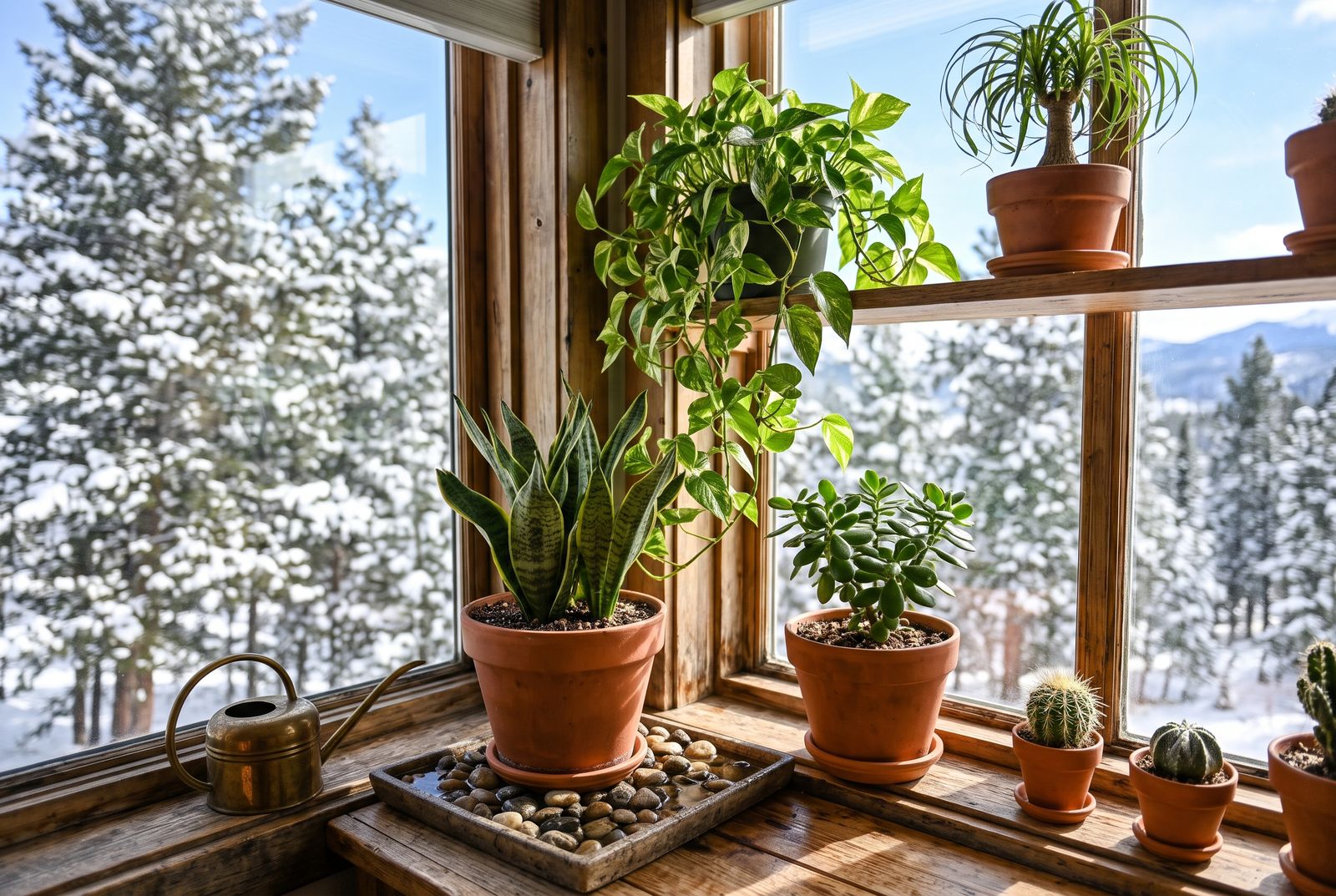
What a plant on a Colorado windowsill is up against
Most common houseplants come from tropical forest floors: warm, shady and humid. A sunny Front Range window in January is nearly the opposite. Light is intense when the sky is clear, the air may sit in the 20s or 30s for relative humidity, cold radiates off the glass at night, and a heating vent nearby blows warm dry air across the leaves. Soil dries out faster than in a coastal home, sometimes in half the time.
The upside is real. Plenty of light is the thing indoor gardeners in cloudy climates struggle to get, and succulents, cacti and many herbs love it. The goal is matching plants to the conditions you have, then using a few habits to help the rest.
Reading your windows
In winter the sun sits low in the southern sky, so a south-facing window floods the room with direct light for much of the day. West windows get hot afternoon sun, east windows gentler morning sun, and north windows only soft indirect light. Distance matters as much as direction: a plant three feet back from a bright window gets a small fraction of the light that one on the sill gets.
Avoid sunburn
A plant moved straight from a dim room or a garden center into a bright south window can scorch, showing bleached or brown patches on the leaves facing the glass. Move it closer over a week or two. Sheer curtains soften the sun for plants that prefer bright but indirect light.
Find plants that suit your window
Filter this list by the light you have and how much help you can offer. The pet filter only shows plants listed as non-toxic to cats and dogs by the ASPCA; if a pet chews plants, confirm with your veterinarian.
Plant matcher
Snake plant
Upright leaves that shrug off dry air and missed waterings. Rots if kept wet.
ZZ plant
Glossy and slow. Stores water in thick rhizomes, so it prefers to dry out fully.
Ponytail palm
A swollen trunk holds water. Loves a sunny window and very little fuss.
Jade plant
Classic succulent for a south window. Water deeply, then let it dry.
Haworthia
Small, striped succulent. Handles bright light and is less likely to scorch than many succulents.
Echeveria
Rosette succulent that needs strong direct sun or it stretches and goes leggy.
Hoya
Waxy leaves resist drying. Grows slowly and may flower in bright, indirect light.
Pothos
Easy trailing vine. Tolerates dry air reasonably, though leaf edges may brown.
Spider plant
Tough and fast. Brown tips in dry air are cosmetic; trim them if they bother you.
Cast iron plant
Lives up to the name in dim corners and cool rooms.
Christmas cactus
A forest cactus, not a desert one. Likes moderate light and evenly moist soil.
Peperomia
Compact, with thick leaves that store water. Many varieties to choose from.
Rosemary
Handles dry air well but is fussy indoors: wants the sunniest window and steady moisture.
Prayer plant
Beautiful patterned leaves that curl and brown in dry air. Needs a humidifier or a terrarium.
Fiddle-leaf fig
Needs bright light and a stable spot. Drops leaves after drafts or a move.
Watering in dry air
The most common mistake after a move to Colorado is keeping a sea-level watering schedule. Pots dry faster here, so plants that thrived on a weekly drink may need water every few days in a sunny window. The fix is not a new schedule; it is checking. Push a finger into the soil. For most leafy plants, water when the top inch or two is dry. For succulents and cacti, wait until the pot is dry nearly all the way down and feels light when you lift it.
Pot material changes the pace. Unglazed terracotta breathes and dries quickly, which suits succulents and punishes ferns. Plastic and glazed ceramic hold moisture longer, a better match for thirsty tropicals in dry air. When you water, water thoroughly until it runs out the drainage hole, then empty the saucer so roots do not sit in water.
Fertilizer salts build up faster when water evaporates quickly, leaving a white crust on the soil or pot rim. Every couple of months, run plain water through the pot for a minute to flush them out.
Helping humidity-loving plants
If you love calatheas, ferns or other thin-leaved tropicals, give them a better microclimate rather than fighting the whole house:
- Group plants together. Each one releases some moisture, and a cluster holds it better than a lone pot.
- Run a small humidifier near the group. It is far more effective than misting, which wears off within minutes.
- Use a bright bathroom with a window, where showers raise humidity daily.
- Grow the fussiest plants in a glass cabinet or terrarium where humidity stays high.
- Keep plants away from heating vents, radiators and wood stoves.
Pebble trays, a saucer of wet gravel under the pot, add a little moisture right at the leaves, but on their own they rarely change things much in a very dry room. For the house as a whole, the indoor humidity guide explains how to raise humidity without fogging the windows.
Starting seeds and growing food indoors
Much of Colorado has a short outdoor growing season with late spring frosts, so many gardeners start warm-season vegetables like tomatoes and peppers indoors. A long-standing rule of thumb along the Front Range is to wait until around Mother's Day to plant tender crops outside, though the right date varies a lot by elevation and neighborhood. Seed packets list how many weeks before the last frost to start each crop indoors.
Dry air is the enemy of seed trays. A clear humidity dome keeps the surface moist until seeds sprout; remove it once seedlings appear so they do not rot. Even a sunny window is rarely enough for sturdy seedlings, which stretch toward the glass. Simple LED shop lights or grow lights hung a few inches above the seedlings on a timer produce much stockier plants.
Herbs on the sill
Mediterranean herbs such as rosemary, thyme and oregano come from dry, sunny places and cope with Colorado air better than most. Basil wants the brightest spot you have and warm temperatures, and it sulks near cold glass at night. Pull pots back from the window on very cold evenings.
Winter pests that like dry, warm air
Spider mites are the classic winter pest in heated, dry homes. Look for fine webbing and tiny pale speckles on leaves, especially on the undersides. Rinse affected plants in the shower, isolate them, and repeat every few days. Raising humidity around plants helps keep mites from returning.
Fungus gnats are the opposite problem: tiny flies that breed in soil kept too wet. Let the top of the soil dry between waterings and they usually fade away. Most houseplants also slow down in winter, so they need less water and no fertilizer until spring. Watering a resting plant on a summer schedule is one of the easiest ways to rot its roots.
Plants also make good company in a guest room. If you are getting one ready, the hosting guide has a checklist, and the winter comfort guide covers drafts near windows, which matter to plants as much as people.
Questions about houseplants at altitude
Why do my houseplants get brown, crispy leaf tips in Colorado?
Dry indoor air is the most common reason, especially in winter. Tropical plants with thin leaves lose water faster than their roots can replace it. Inconsistent watering and salt buildup in the soil cause similar tips, so check those too.
Do I need to water houseplants more often at altitude?
Often, yes, particularly in bright windows and in terracotta pots. Instead of a fixed schedule, push a finger into the soil and water when the top inch or two is dry for most plants, or when the pot feels light.
Can a plant get sunburned through a window?
Yes. A plant moved suddenly from a dim room into a bright south or west window can develop pale or brown scorched patches. Move plants to brighter spots gradually over a week or two.
Why do spider mites keep showing up in winter?
Spider mites thrive in warm, dry air, which describes many heated Colorado homes. Inspect leaf undersides for fine webbing and speckling, rinse plants in the shower, and raising humidity around the plant helps discourage them.