
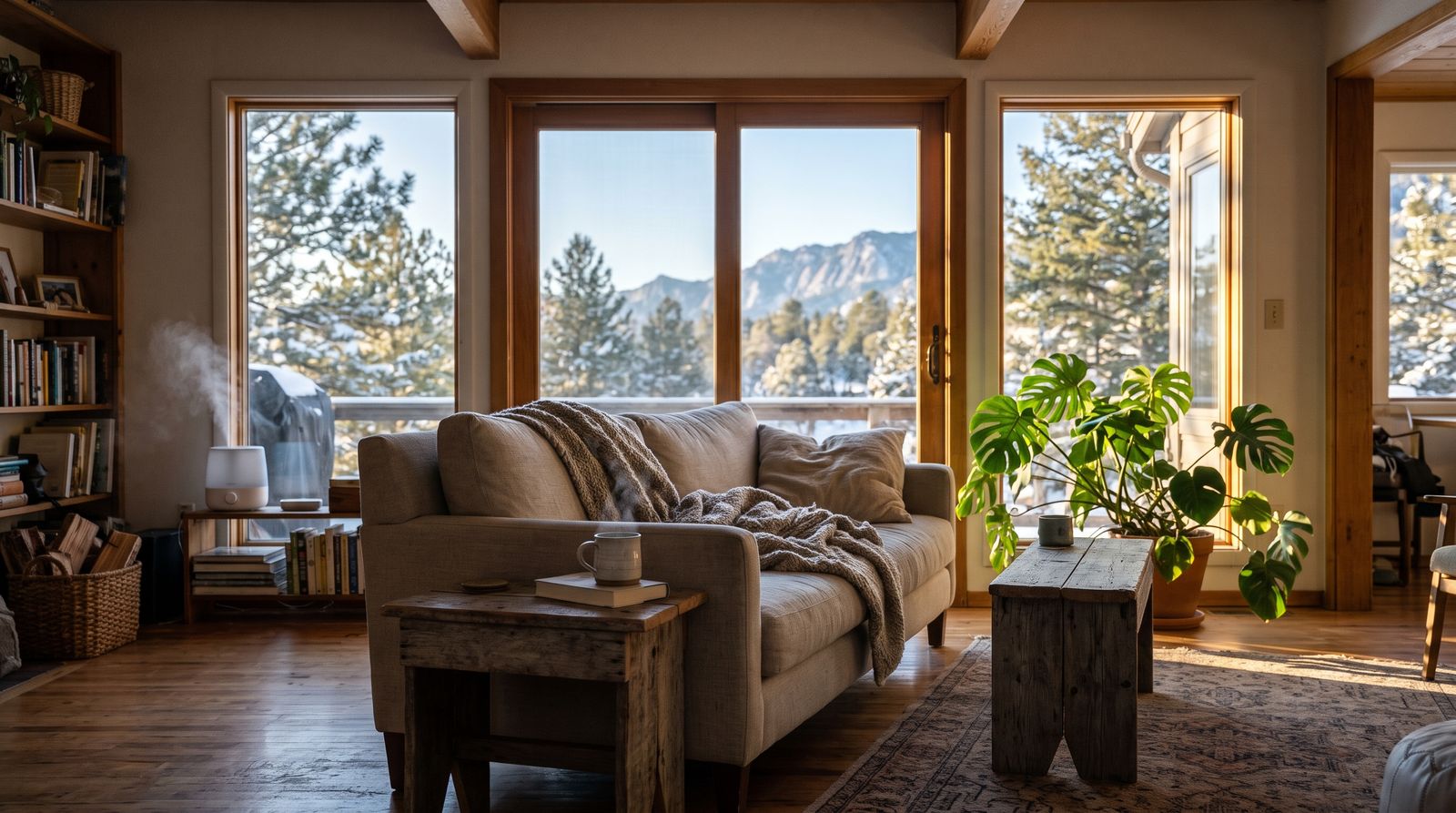
What a winter here is actually like
Newcomers often expect months of gray. What they find along the Front Range is something stranger: a storm drops snow, the sky clears to deep blue, the sun melts the south side of the street by afternoon, and the temperature falls hard after dark. Chinook winds can blow warm, dry air down off the mountains and raise temperatures quickly. In the mountains, cold settles in for longer stretches and snow stays put.
That pattern shapes indoor comfort. Big swings between day and night mean the house is constantly gaining and losing heat. Clear skies give you free warmth through the windows by day and pull heat out through the same glass at night. And the air, dry outside, becomes drier still once the furnace warms it.
Let the sun do some of the work
Low winter sun shines deep into south-facing rooms. On a clear day, that light warms floors, furniture and the air in a way you can feel. Treat your window coverings like a valve:
- In the morning, open shades on east and south windows once direct sun reaches them.
- In the afternoon, open west-facing shades if those rooms are cool.
- Around sunset, close everything. Glass is the weakest part of most walls, and a covered window loses heat more slowly.
Cellular or honeycomb shades trap a layer of air and are among the better insulating window treatments. Heavy lined curtains that reach the floor do a similar job. Even closing ordinary blinds after dark makes a room feel less chilly near the glass.
Dark floors, warm afternoons
A rug or dark wood floor in a sunny spot soaks up heat during the day and gives a little back after the sun goes down. A favorite chair placed in that patch of sun is the cheapest heater you will ever own.
Find and calm drafts
Drafts make a warm room feel cold because moving air strips heat from skin. On a windy evening, walk slowly around exterior walls with the back of your hand near window edges, door frames, outlets on outside walls and the attic hatch. A thin ribbon of tissue held near a gap will flutter if air is moving.
For comfort, quick fixes go a long way: a draft stopper along the bottom of an exterior door, removable weatherstrip tape on a leaky window sash for the season, and closing the fireplace damper whenever there is no fire. Larger problems like failing window seals or poorly insulated walls are worth discussing with a qualified contractor once the weather turns.
Also notice cold surfaces. A room can have warm air and still feel uncomfortable if you sit next to a cold window or walk on a cold slab floor. Moving a reading chair a few feet from the glass or adding a thick rug changes how a room feels without touching the thermostat.
Heat that feels better, not just hotter
Humidity changes how warm a room feels. Very dry air lets moisture evaporate from your skin quickly, which cools you. Bringing indoor humidity into a comfortable range often makes the same thermostat setting feel warmer. The indoor humidity guide shows how far to go before windows fog on cold nights.
A few more ways to make heat feel better:
- Run ceiling fans clockwise at low speed to push warm air down from the ceiling.
- Keep furniture and long curtains off heating registers and baseboard heaters.
- Lower the thermostat at night and when you are out, and use a programmable or smart thermostat so you wake up to a warm house.
- Close doors to rooms you rarely use, if your heating system allows it, and keep the living spaces cozy.
- Use a space heater only with plenty of clearance, plugged directly into the wall, and never while sleeping.
Fires and alarms
A crackling fire is part of winter for many Colorado households. In parts of the Denver metro area, wood burning is restricted on high-pollution advisory days, so check local rules before lighting one. Keep working smoke alarms and carbon monoxide alarms near sleeping areas, especially in homes with gas appliances, a fireplace or an attached garage.
Skin, sleep and everyday comfort
Dry winter air is hard on people as well as houses. Moisturizing right after a shower, while skin is still damp, holds in more water than lotion applied later. Lip balm on the nightstand, a water glass by the bed and a small humidifier in the bedroom help many people sleep better through January.
For sleep, layers beat a hotter thermostat. Flannel or wool bedding, a duvet you can fold back, and warm socks let you adjust through the night without overheating the house. A cooler bedroom with warm bedding is a comfortable combination for most people.
In a dry winter climate, comfort is often less about the number on the thermostat and more about moisture, drafts and cold surfaces.
The snowy entryway
Snow, ice-melt grit and mud arrive on every pair of boots. A good entry setup keeps floors dry and the rest of the house warmer because the door is not left open while someone hunts for gloves. A sturdy outdoor mat, a boot tray inside, a bench for sitting, and hooks for wet coats cover most of it. Wipe up meltwater quickly on wood floors, which do not appreciate standing water any more than they like dry air.
Room-by-room winter comfort checklist
Tick items off as you go. Your progress is saved in this browser so you can come back on the next cold weekend.
0 done
Expecting family for the holidays? Winter is also the season when visitors from lower elevations arrive. The hosting guide covers the guest room and their first two days, and if baking is part of the plan, the baking guide will save a batch of cookies or two.
Questions about winter comfort
Why does my house feel cold even when the thermostat says 68?
Dry air, drafts and cold surfaces all play a part. Low humidity lets moisture evaporate from your skin faster, which feels cooler, and cold windows and floors pull heat from your body even when the air is warm. Raising humidity a little, closing shades at night and adding rugs often helps more than turning up the heat.
Which way should a ceiling fan turn in winter?
On most fans, clockwise at low speed when you look up at it. That pulls air up and pushes the warm air that collects near the ceiling gently down the walls, without creating a cooling breeze.
Should I open my blinds on cold, sunny days?
Yes, on windows that get direct sun. Colorado winter sun can add noticeable warmth to south-facing rooms. Close the shades again around sunset so the glass does not pull that heat back out overnight.
Is it fine to use my fireplace any time in winter?
Check local rules first. Parts of the Denver metro area restrict wood burning on high-pollution advisory days. Whatever you burn, keep working smoke and carbon monoxide alarms on every sleeping level.